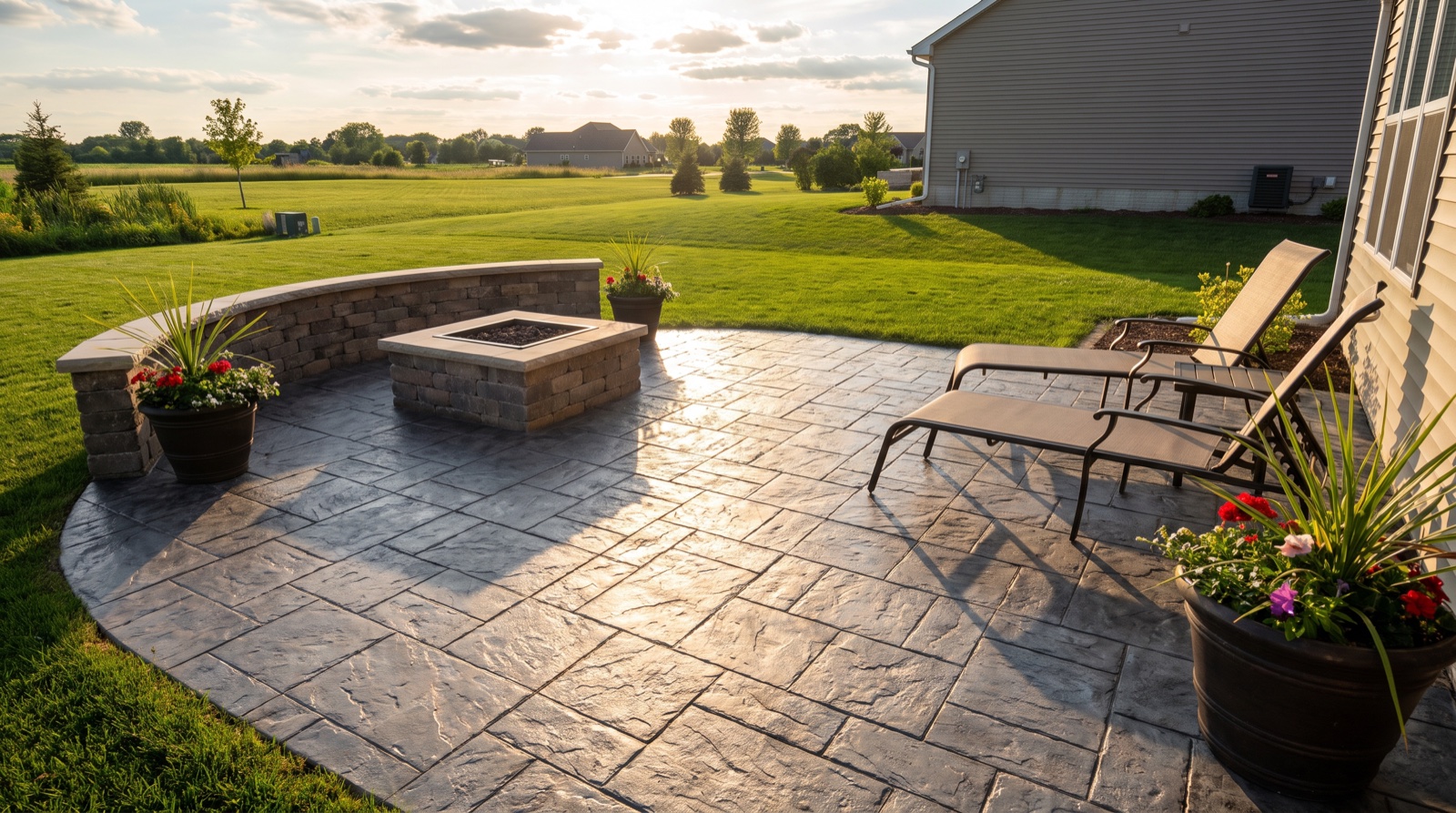
For most Kenosha homeowners, a poured concrete patio is the better value. It costs less to install, needs less upkeep, and holds up well through Wisconsin winters when the base and joints are done right.
Pavers make sense if you want a specific look, expect to dig up part of the patio later, or prefer repairs you can do one piece at a time. The right choice depends on your budget, your yard, and how much maintenance you are willing to do.
Side by Side Comparison
| Factor | Poured Concrete | Pavers |
|---|---|---|
| Typical installed cost | $8 to $15 per sq ft | $15 to $30 per sq ft |
| Expected lifespan | 25 to 40 years | 25 to 50 years |
| Install time | 2 to 4 days plus cure | 3 to 7 days |
| Routine upkeep | Low | Moderate |
| Spot repairs | Harder to hide | Easy to swap units |
| Weed growth | Rare | Common in joints |
These are typical ranges for southeastern Wisconsin. Site access, slab thickness, soil conditions, and finish choices all move the final number.
Upfront Cost
Concrete wins on price in almost every case. A standard broom finished slab usually costs about half of what a comparable paver patio does.
The gap comes from labor. Pavers are set by hand, one unit at a time, over a compacted gravel and sand base, while a slab is formed, poured, and finished in a single day.
A 300 square foot patio might run $2,400 to $4,500 in plain concrete. The same footprint in pavers often lands between $4,500 and $9,000.
Decorative finishes narrow that gap. Stamped or colored concrete typically costs $14 to $25 per square foot, which puts it close to entry level pavers.
Longevity
Both materials can last decades. The difference is in how they age.
A well built concrete patio stays flat and solid for 25 to 40 years. Its main risk is cracking, which is controlled with proper base prep, reinforcement, and correctly spaced control joints.
Individual pavers are very strong and rarely break. The surface as a whole is what shifts, because each unit sits on a sand bed and can settle, tilt, or spread at the edges over time.
Expect to relevel sections of a paver patio every several years. A slab does not need that kind of attention.
Repair Ease
This is where pavers have a real advantage. A stained, chipped, or sunken unit can be lifted out and reset or replaced without touching the rest of the patio.
That also helps if you ever need to reach a buried utility line. The pavers come up, the work gets done, and the same pavers go back down.
Concrete repairs are more visible. Cracks can be sealed and sunken slabs can often be lifted, but a patch rarely matches the original color exactly.
Still, most slab problems are fixable without starting over. Our crack and surface repair work handles the majority of patio issues we see around Kenosha and Pleasant Prairie.
Aesthetics
Pavers offer the widest range of patterns, colors, and textures out of the box. Herringbone, basket weave, and mixed size layouts all give a patio a distinct, handcrafted look.
Concrete has more options than most people expect. Your choices include:
- Broom finish: clean, simple, and slip resistant.
- Exposed aggregate: a textured, pebbled surface with good traction.
- Integral or stained color: earth tones that soften the standard gray.
- Stamped patterns: impressions that mimic stone, brick, slate, or wood plank.
A stamped and colored slab gets you the appearance of natural stone or brick with no joints for weeds or ants. It does need resealing every two to three years to keep the color sharp.
Wisconsin Climate Suitability
Kenosha sees dozens of freeze-thaw cycles each winter, and lake effect moisture off Lake Michigan keeps the ground wet going into the cold months. That combination is hard on any outdoor surface.
How Concrete Handles It
Concrete performs well here when it is specified for the climate. That means air entrained mix, a strength of 4,000 psi or higher, a compacted gravel base, and enough slope to shed water.
Deicing salt is the main threat to the surface. Avoid salt during the first winter, use sand for traction instead, and keep the slab sealed.
How Pavers Handle It
Pavers flex with ground movement instead of cracking, which is a genuine benefit in frost prone soil. The tradeoff is heaving.
Clay heavy soils, common in Somers, Bristol, and much of Kenosha County, hold water and lift unevenly when they freeze. Pavers on that ground often end up with raised edges and low spots that need to be reset in spring.
Snow removal matters too. A shovel or snow blower glides across a smooth slab but can catch on paver edges that have shifted.
Which One Fits Your Project
Choose poured concrete if you want:
- The lowest installed cost
- A flat, stable surface for furniture and grills
- Minimal weeding and releveling
- Easy snow clearing
Choose pavers if you want:
- A classic segmented look with many pattern options
- Simple unit by unit repairs
- Future access to anything buried underneath
If you are replacing an old, cracked patio, the existing slab has to come out first. We handle tear out and haul away as part of the same job so the new base starts on solid ground.
Not sure which direction to go? Get in touch for a free quote or call (262) 667-5367, and we will measure your yard and price out the options.